
Get a summary of this article with your favorite AI
Key Highlights
- •In a first-level appeal vs second-level appeal comparison, the second level builds on the first decision and addresses what remains unresolved.
- •Eligibility depends on the first-level determination, whether a further review exists, and the payer, plan, or program that governs the claim.
- •Reframe the argument around the unresolved issue, then reassess evidence. Strong second-level appeal documentation answers that issue directly.
- •Verify the second-level appeal deadline, reviewer, form, and channel with the payer, since these rules differ by payer and program.
- •Escalate only when a defensible unresolved issue exists, and use a corrected claim when the real problem is a claim error.
- •Confirm finality and the next review path, keep the full history, and use Bill Matters to help prepare re-appeals for human review.
If the payer already rejected your appeal once, what would a second one change?
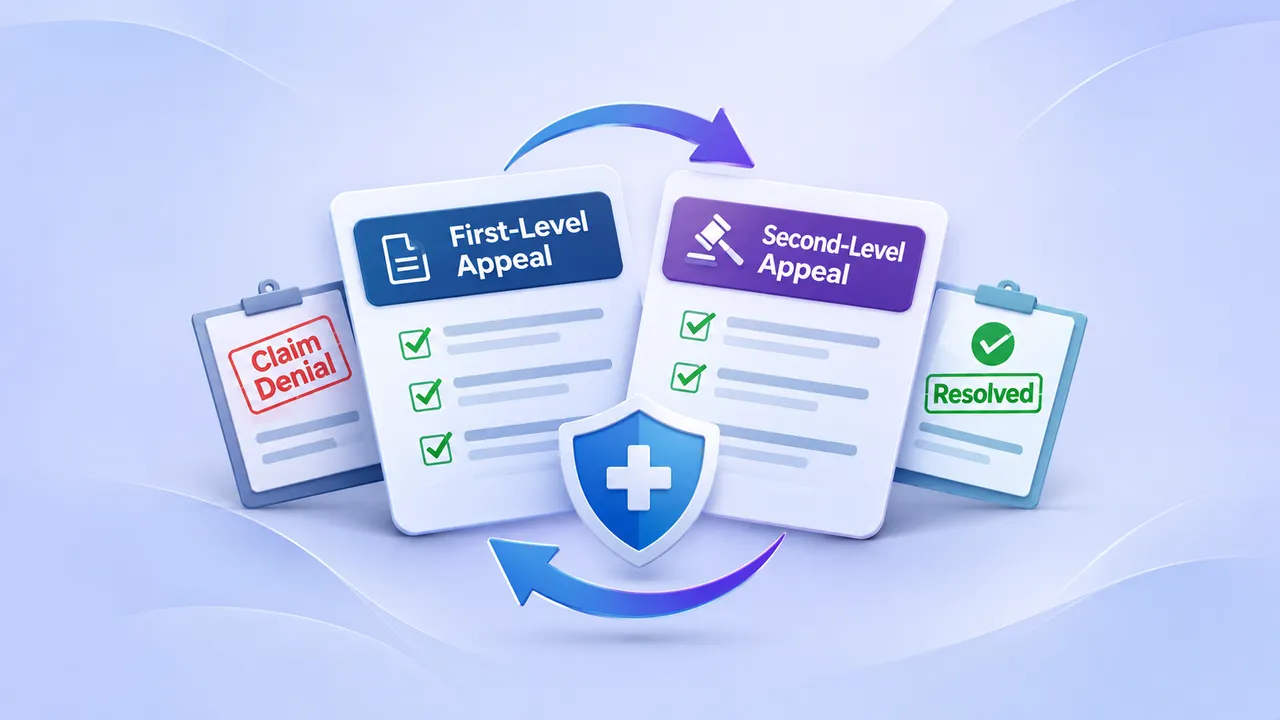
Quite a lot, when it is done right. A second-level appeal is not the first appeal sent again. It starts from the first-level decision, addresses the point that remains unresolved, and goes to a defined review that may have its own reviewer, evidence rules, and deadline. In a first-level appeal vs second-level appeal comparison, the claim stays the same. The argument, the record, and the rules do not.
Those rules vary by payer, plan, contract, and program, and even the labels differ. Original Medicare calls its first two levels a redetermination and a reconsideration, while other payers use those words differently. Treating the levels as duplicates can cost a billing team a deadline or a stronger record. This guide follows a claim from first-level review through the second-level decision and what comes after.
How Does a First-Level Medical Claim Appeal Work?
A first-level provider appeal is the payer's first re-examination of a claim it has already decided. The provider disputes the initial determination, and a reviewer who was not part of that decision looks at it again. Under Original Medicare, MAC staff not involved in the initial determination perform the redetermination.
1. When Does the First-Level Appeal Begin?
It begins with an initial claim determination, usually shown on the remittance or EOB, that denies or reduces payment. That adverse decision carries appeal rights, and the notice normally explains them.
Under Original Medicare, the first-level request is due within 120 days of receiving the remittance advice, with receipt presumed five days after the notice date. Other payers set their own windows.
2. What Is the First-Level Appeal Asking the Payer to Reconsider?
A first-level claim appeal connects three things: the denial reason on the remittance, the issue that reason puts in dispute, and the reconsideration you want. A necessity denial disputes a necessity finding. A payment below the contract rate disputes an amount. Every claim denial appeal should name that issue.
Also Read: How Medical Billers Can Verify CO-45 Adjustments and Catch Underpayments
3. What Happens During the First-Level Review?
The reviewer compares the request and attached material against the original decision and the payer's policy or contract. Some reviews involve clinical staff.
Capital Blue Cross, for instance, says its medical director contacts the provider to confirm clinical information before deciding. Original Medicare contractors generally issue a decision within 60 days of receiving the request.
4. What Decision Comes from the First Level?
A favorable decision reverses the denial and leads to a revised remittance. An unfavorable decision upholds it, usually in a written notice. A partial outcome overturns some lines or amounts and leaves others standing. Some requests are dismissed on procedural grounds before any merits review.
What happens after a first-level appeal is denied or only partly granted is a separate decision for the billing team.
When Can a Medical Claim Move to a Second-Level Appeal?
A claim can move to a second-level claim appeal when the first-level determination leaves the dispute unresolved and the payer or program offers a further review for that claim. Both conditions must be true.
1. Start With the First-Level Determination
Read the determination itself, not just the claim status. It states what the reviewer decided, which issue is still open, and the date on the notice. After a partial overturn, only the unresolved lines carry forward.
2. Verify That a Second-Level Review Exists
Not every payer has one, and the provider appeal process differs in name and structure. Original Medicare follows a MAC redetermination with a QIC reconsideration.
UnitedHealthcare describes a two-step process in which a claim reconsideration comes before an appeal, though reconsideration does not apply in some states. Capital Blue Cross offers a second-level independent review after the first internal appeal.
Workers' compensation treatment disputes follow state-specific utilization review structures rather than one universal second-level appeal sequence. For WC billing teams, available routes may include internal review, independent medical review, or administrative proceedings, depending on the jurisdiction.
Also Read: How to Resolve CO-50 Denials and Appeal Medical Necessity Claims?
3. Confirm the Claim Is Eligible for Further Review
Eligibility can depend on who is appealing, the provider's participation status, and the type of claim. Practice owners and doctor practices should verify these details before pursuing a second-level provider appeal.
For some non-contracted Medicare Advantage appeals, the path can be automatic. Blue Cross and Blue Shield of Nebraska says that when it upholds a denial on a non-contracted provider's reconsideration, it forwards the case to the CMS Independent Review Entity, so no separate second filing is needed. Contracted providers generally follow their contract.
How Should the Second-Level Appeal Differ From the First?
The difference between first-level and second-level appeals is that the second responds to the first-level determination instead of repeating the first request. It narrows to the point the reviewer left unresolved and explains why that point should come out differently.
1. Address the First-Level Determination Directly
State what the first reviewer decided and why. If the notice cites a policy provision or contract term, name it. Then say what remains disputed: the reviewer applied the wrong criterion, misread the record, or overlooked a point.
2. Reframe the Case Around the Unresolved Issue
Work in one line: first-level reasoning, unresolved point, second-level response. Hypothetically, if the first reviewer upheld a denial because the record did not show earlier treatment had failed, the second-level argument should answer that finding. Restating that the service was necessary does not.
Also Read: How to Write a Medical Necessity Appeal Letter
3. Match the Argument to the Second-Level Review Context
The second reviewer may be a different person, a panel, or an independent organization. Original Medicare's second level, for example, is an independent review of the administrative record, including the earlier decisions. A reviewer reading the whole file will notice an argument that ignores the first-level rationale.
4. State the Resolution Still Requested
End with what you want the second reviewer to do, such as overturn the denial on the disputed line or reprocess payment at the contracted rate. A request that merely restates the first one can look like a duplicate.
What Evidence Should Billing Teams Reassess Before a Second-Level Appeal?
Reassess evidence against the first-level determination. Keep what the reviewer already has, find what the reviewer found missing or unpersuasive, and add only material that answers the unresolved issue. Second-level appeal documentation is built from that comparison, not from a fresh start.
1. Preserve the First-Level Appeal Record
Pull the original denial, the first-level appeal, everything you submitted, and the first-level determination. Your first-level appeal documentation shows what the reviewer saw. Blue Cross Blue Shield of Michigan's Medicare plan guidance, for example, lists a copy of the first-level appeal response letter among second-level submissions.
2. Identify the Evidence Gap
Ask four questions about the first-level outcome:
- What remains unsupported?
- What did the first reviewer not accept?
- Did the determination identify missing information?
- Was relevant evidence left out of the first submission?
3. Add Evidence Only When It Addresses the Unresolved Issue
More documentation does not automatically make a stronger appeal. Each addition needs a defined purpose tied to the unresolved point. Resending what the first reviewer already weighed adds volume, not support.
4. Verify Whether New or Additional Documentation Is Required
Second-level appeal documentation requirements differ, so check them for your payer. Under Original Medicare, the reconsideration request should include any missing evidence listed on the redetermination notice, and evidence sent at later levels is considered only if good cause is shown.
Mountain Health CO-OP says second-level provider appeals should include new evidence and records not previously submitted. Cigna Healthcare's second-level review for its Medicare Select Plus Rx plans asks for additional documentation if it was not submitted at the first level.
Bill Matters can help at this point. Its AI Evidence Intelligence helps connect the first-level denial context to the case file, flags missing or potentially useful second-level appeal supporting documentation, and supports re-appeal preparation, so your team can decide what the second-level submission still needs.
Also Read: Human-in-the-Loop Requirements: Why AI Should Flag, Not Auto-Decide?
Don't Let Appeal Escalation Become Déjà Vu
Reduce repetitive case handling and give revenue teams a more disciplined way to manage complex payer reviews
Which Payer Requirements Must Be Verified Before Filing a Second-Level Appeal?
Before filing, verify four provider appeal requirements: the deadline, who reviews the appeal, the required form and submission channel, and any procedural rule that affects acceptance. Claim appeal requirements differ by payer and program, and none of them tells you whether the appeal is strong.
1. Confirm the Filing Deadline
The appeal deadline after a first-level denial usually runs from the first-level determination, but the provider appeal deadline depends on the payer. Never reuse the first-level window.
| Payer or program | Second-level filing window | Clock starts |
|---|---|---|
Original Medicare Parts A and B (QIC reconsideration) | 180 days | Receipt of the redetermination notice, presumed 5 days after the notice date |
Cigna Healthcare, Medicare Select Plus Rx | 60 calendar days | Date of the Level 1 decision letter |
30 calendar days | Date of the first-level determination |
These are examples with their own scope. Confirm the current window in the payer's manual or on the determination notice.
2. Confirm Who Reviews the Appeal
Reviewer structure is payer specific. Under Original Medicare, the second level goes to a Qualified Independent Contractor, separate from the MAC that handled level one. Cigna says someone not involved in the initial decision handles its second-level review. Capital Blue Cross routes second-level appeals to an independent review.
3. Confirm Required Forms, Identifiers, and Submission Channel
Original Medicare asks for a written request on Form CMS-20033 or any document with the required elements, plus a copy of the remittance advice or redetermination notice, the patient's name and Medicare number, and the name of the MAC. Requests go to the address on the notice or follow the QIC's electronic instructions.
UnitedHealthcare accepts reconsiderations and appeals through its provider portal or API. Check each payer's form, identifiers, attachment instructions, and channel.
4. Verify the Payer's Level-Two Procedural Rules
Look for rules that can affect processing even when the evidence is sound:
- Capital Blue Cross says provider payment is required for its second-level independent review and points to its provider manual for the requirements.
- Under Original Medicare, documents sent after the reconsideration request is filed may extend the QIC's decision timeframe.
Should Every First-Level Denial Be Escalated to a Second-Level Appeal?
No. An available path does not make escalation the right next action. When to file a second-level appeal comes down to four tests: the problem is a true appeal issue, a defensible unresolved issue remains, the value justifies the effort, and the verified window is still open.
1. Determine Whether the Problem Is Actually an Appeal Issue
Not every denied claim appeal needs a second level. Some denials come from claim errors that no argument will fix. CMS has instructed Medicare contractors not to correct minor claim errors and omissions through the appeals process.
UnitedHealthcare points providers to a corrected claim when, for example, a date of service or modifier needs correcting. Fix the claim when the claim is wrong. Appeal when the decision is wrong.
Also Read: What Should You Do First When Facing a Healthcare Claim Denial
2. Confirm There Is a Defensible Unresolved Issue
Reread the first-level rationale. Claim appeal escalation makes sense when the reviewer misapplied a policy or contract term, overlooked a point you can support, or handled the process incorrectly. If the reviewer applied the policy correctly to facts you cannot change, a second-level appeal has little to work with.
3. Consider Financial and Operational Materiality
RCM heads and denial specialists should weigh five factors before deciding whether a second-level appeal justifies the recovery effort:
- Claim value
- Recovery opportunity
- Staff effort required
- Whether the same issue recurs across claims
- Strength of the case
A low-value claim with a recurring denial reason may still deserve escalation, because the same reasoning can apply to the others.
4. Escalate Within the Verified Appeal Window
Apply the deadline you verified to the decision itself. A case that deserves escalation but is not ready before the window closes is a lost case. Set an internal due date well ahead of the payer's. Original Medicare contractors can dismiss a request filed late when good cause is not shown.
See how Bill Matters helps your team find missing evidence, prepare re-appeals, and track appeal outcomes while a person reviews every appeal before it reaches a payer. Book a product demo.
After a Second-Level Appeal Decision, What Comes Next?
Read the second-level decision for two things: whether it is final and which review path, if any, remains. Then record the outcome and carry the full case history forward.
1. Determine if the Second-Level Decision Is Final
Finality depends on the payer and program. For a Medicaid managed care claim, UnitedHealthcare Community Plan's Texas Medicaid guide states that only one appeal is allowed per claim and appeal decisions are final. Under Original Medicare, a QIC decision is not the end of the road. The decision notice and the payer's manual state what rights remain.
2. Verify the Next Available Review Path
The next level of appeal after a claim denial can be another internal level, independent or external review, contractual escalation, or a program-specific appeal. Original Medicare continues to an OMHA Administrative Law Judge hearing, then the Medicare Appeals Council, then federal court.
A hearing request is due within 60 days of the QIC decision, and levels three and five require the amount in controversy to meet an annually updated threshold. For legal rights beyond the payer's process, consult counsel or the regulator.
3. Preserve the Complete Appeal History
Keep the case as one continuous record, in this order:
- Original denial
- First-level appeal
- First-level determination
- Second-level appeal
- Second-level determination
- Next action
Medicare's appeals booklet advises including copies of the decision letters issued at previous levels with later requests.
4. Track the Outcome and Recovery
A reversed denial is not recovered until the revised remittance posts and payment arrives. Confirm that the payment matches the decision, and treat a short payment on any provider claim appeal as a new variance. Track outcomes by payer and denial reason so patterns show up.
Bill Matters multi agent AI workflow can support this stage by helping prepare evidence-backed re-appeals from the case history and tracking appeal status and outcomes, so the team does not rebuild each case by hand. A person reviews and approves every appeal before it reaches a payer, and the platform does not replace the team's judgment on whether to continue.
Don't Let the Last Mile Lose Revenue
Connect appeal outcomes to payment verification and account resolution, so favorable decisions translate into realized reimbursement
Wrapping Up
In a first-level appeal vs second-level appeal decision, the winning move is precision, not persistence. Read the first-level determination, answer what remains unresolved, verify the payer's rules, and escalate only when the case justifies it. A disciplined medical claim appeal process treats each level as a new decision point with its own record. For medical billing teams handling many of these, Bill Matters offers a human-reviewed way to prepare and track appeals across levels.