
The Story
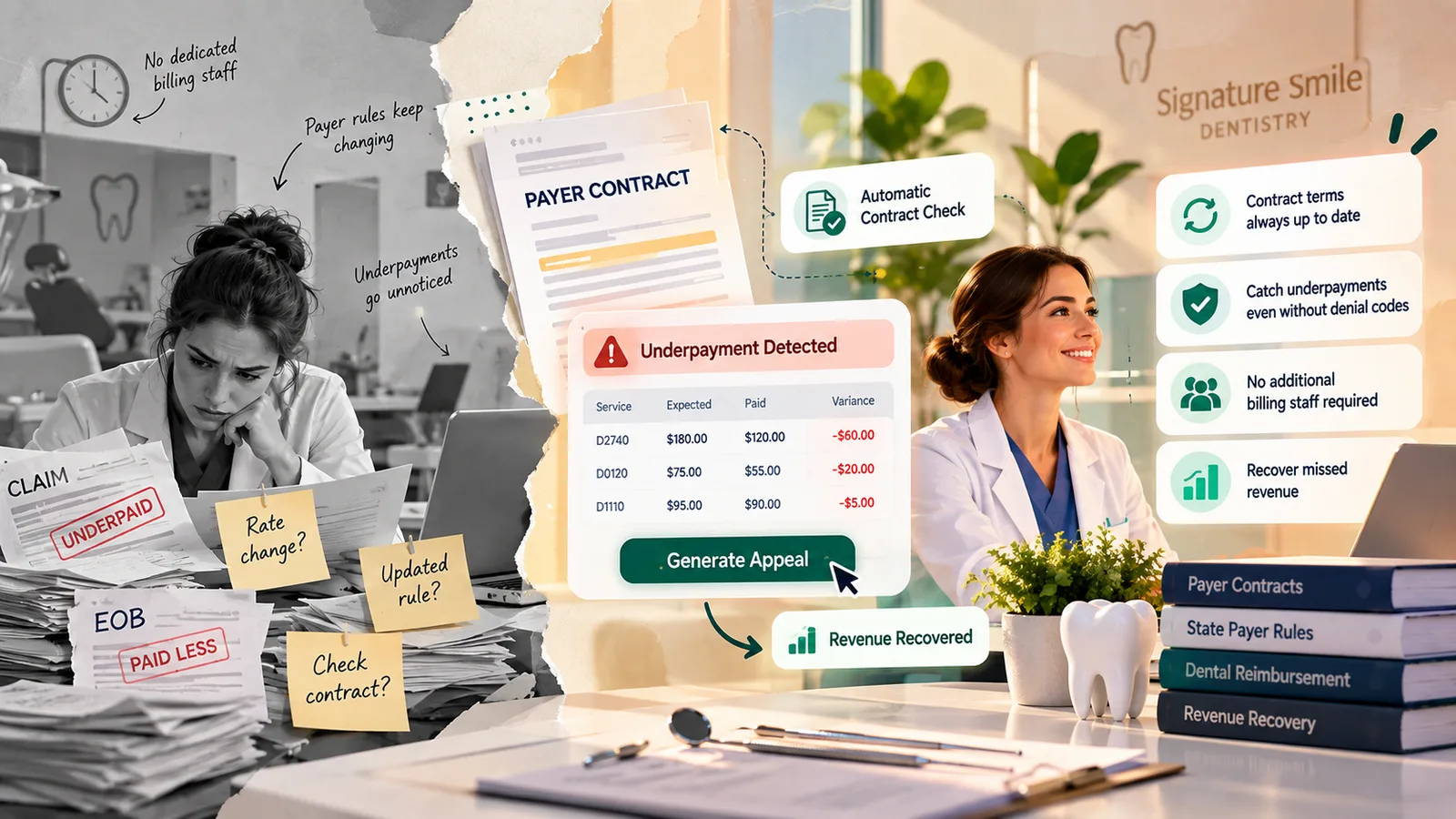
Signature Smile Dentistry, a dental practice with a handful of providers, billed a mix of commercial payers across the state, each running its own contract terms, coverage policies, and reimbursement rates. With no dedicated billing staff, keeping up with payer rule changes fell to whoever had time between patient visits, and the practice had no reliable way to catch a rate change until a remittance came back short.
An underpaid claim rarely arrived with a denial code attached, it simply paid less than the contract allowed, which meant it read as a normal payment unless someone checked the number against the actual contract terms. Signature Smile Dentistry began uploading its remittances into Bill Matters, and within a few weeks, underpaid claims that would have gone unnoticed started getting caught and appealed. Recovering revenue the practice hadn't realized it was losing.
Challenge
Payer contracts didn't announce when their terms changed. A reimbursement rate could shift, a coverage policy could tighten, or a billing rule could update mid-year, and the practice had no process to catch it beyond noticing a payment looked lower than expected, after the fact, on a claim already submitted.
With no dedicated billing staff to track contract terms across every payer, changes went unnoticed until enough underpaid claims accumulated to raise a flag, and by then, some had already aged past the point of an easy correction. Revenue was being lost not to denials, but to underpayments nobody had a reliable way to catch.
Solution
Bill Matters checked each uploaded remittance against the payer contract that actually governed the claim, not a generic rate table, catching the exact clause or rate line a payment fell short of. When a claim paid below what the contract allowed, the system flagged it as an underpayment directly, even with no denial code attached to point to it.
The practice started uploading remittances as they came in, and underpaid claims that would have gone unnoticed got surfaced and built into appeals instead of being accepted as final. Contract terms stayed current in the background, so a claim was always checked against the version actually in effect on that date of service, not an outdated one.